Your First International Trip from Nigeria: The Complete Checklist for 2026

A first trip abroad comes with dozens of small details that are easy to miss: how long your passport must be valid, when to apply for a visa, how much luggage you can take, how to pay for things abroad. Almost every problem is avoidable if you know what to do and in what order. Yet very few guides are written for someone leaving from Lagos or Abuja on a Nigerian passport with a Nigerian bank account.
This guide is for exactly that person: someone who has never traveled outside Nigeria and wants a clear, step-by-step plan.
Step One: Your Passport
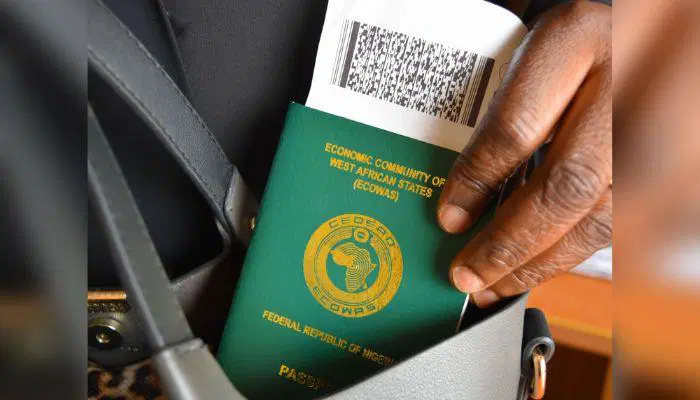
Everything starts with your passport. Not your visa. Not your flight. Your passport, because everything else depends on it existing and being valid.
If you don't have a passport yet, apply online through the Nigeria Immigration Service at immigration.gov.ng. You'll need your National Identification Number (NIN), you'll pay the fee online, and you'll attend a biometrics appointment. Official processing times are a few weeks, but delays happen, so apply as early as you can.
If you already have a passport, check three things before you book anything else. First: when does it expire? Many countries want your passport to be valid for at least 6 months after the date you leave their country. So if your passport expires in 8 months and you plan a 3-month trip, you could be turned away, because only 5 months would be left when you leave. Second: does it have enough blank pages? Most visas require at least one full blank page, and some countries require two. Third: is the information in it correct? Name, date of birth, and gender must match your other documents exactly. Any discrepancy can cause problems at check-in or immigration.
If your passport needs renewal, do not book international flights until the renewal is complete. Renewing a passport in Nigeria can take longer than expected and airlines will not let you board without a valid travel document.
Step Two: Choose Your Destination Carefully
With a Nigerian passport, your destination choice affects how much paperwork you will do before your trip. Some countries require a visa applied for in advance. Some offer a visa on arrival (you pay at the airport on entry). Some are fully visa-free for Nigerian citizens. A small number have restrictions that make entry difficult regardless of documentation.
For a first trip, pick somewhere Nigerians can enter visa-free or with a visa on arrival. Good options are Ghana, Senegal and other ECOWAS countries, Kenya, Rwanda and the Maldives. Vietnam and Malaysia need an eVisa, but you can apply online in a few days. The UK, Schengen countries, Canada and the US are all worth visiting, but they need much more time and paperwork, so they aren't the place to start if you want to travel in the next 4 to 6 weeks.
See our full guide to countries Nigerians can visit without advance visas at litexplore.com/countries-visa-on-arrival-nigerian-passport-2026.
Step Three: Apply for Your Visa (If Required)
If your destination requires an advance visa, start this process before you book your flights. Not after. If the visa is refused, you do not want to have paid for non-refundable flights.
For most visas, apply 6 to 8 weeks before you plan to travel, and for the UK, US, Canada or Schengen countries, even earlier. Some visas come back in a week or two, while others take many weeks. Starting early gives you time to collect documents, fix mistakes and still leave on time if processing drags.
For every visa application, the core documents you will need are your passport, bank statements for the last 3 to 6 months, proof of employment or business (letter from employer, payslips, or CAC registration), proof of accommodation in the destination country (hotel booking or invitation letter), return flight itinerary (booked but ideally refundable until the visa is confirmed), and a cover letter explaining the purpose of your visit and when you intend to return to Nigeria.
Don't move a large sum into your account just before you apply. Visa officers treat that as a red flag. They want to see steady income and savings over months, not money that appeared two weeks before the application.
Step Four: Book Your Flight
Once you have your passport and either have your visa or are confident about getting one, book your flights. The general rules for getting reasonable prices from Nigeria:
Book 6 to 8 weeks in advance for the best combination of price and seat availability. Book too late and prices climb as seats fill up. For December and holiday periods, book earlier still.
Use Google Flights to research prices first. Enter your route and set up a price alert so you are notified when fares drop. Check different departure dates using the date grid view, which shows you a full month of prices at once and makes it easy to spot cheaper travel days.
Luggage allowance is not the same on every airline. Read the specific terms for your ticket before you assume anything. Economy tickets on budget carriers often include hand luggage only. International tickets on major carriers typically include 23kg of checked baggage. Confirm before you pack.
Step Five: Sort Your Money
This is where many first-time travelers from Nigeria get stuck, because Nigerian bank cards and foreign payment systems don't always work well together.
Don't count on your regular naira debit card. Many banks limit or block foreign spending on naira cards, and the limits are low even where it's allowed. Sort out a plan for money before you leave.
These are the most reliable options in 2026:
Domiciliary account with a foreign currency card: Open a dollar or euro domiciliary account at GTBank, Zenith, Access, First Bank, or UBA. Load it before your trip. Ask for the dollar or euro card that comes with it, and check that it works at ATMs abroad. For most travelers this is the safest way to carry larger amounts.
Fintech dollar cards: Several Nigerian fintech apps offer dollar accounts or virtual dollar cards that you fund from your naira account. They're handy for online bookings and some card payments abroad, but many are virtual only, so they can't be used at ATMs, and fees and spending limits vary a lot. Read the terms, and test the card with a small payment before you rely on it. Note that international services such as Wise and Revolut don't currently open accounts for people living in Nigeria.
Cash in foreign currency: Buy dollars, euros, or the currency of your destination from a bureau de change or your bank before you travel. Compare your bank's rate with licensed bureaux de change, because rates can differ a lot. Always carry some cash whatever cards you have, because some places, markets and buses only take cash. Check the cash declaration limits for Nigeria and your destination if you're carrying a large amount.
The question of how much to take depends on your destination and trip length. As a baseline, bring enough cash to cover your first two days of expenses plus one emergency (a taxi to a hospital, a missed connection, an unplanned night in a hotel). Do not rely exclusively on ATMs abroad, as cards can be blocked, machines can be out of service, and some destinations have very limited ATM coverage.
Notify your bank that you are traveling before you leave. Many Nigerian banks will block international transactions as a fraud precaution if they see charges from a foreign country without advance notice. A quick call or a message through your banking app prevents your card from being frozen mid-trip.
Step Six: Get Travel Insurance
Don't skip travel insurance. It feels like an easy saving right up until something goes wrong.
The minimum coverage you need: emergency medical coverage of at least $50,000 (many Schengen visa applications require a minimum of 30,000 euros of medical coverage), emergency medical evacuation, trip cancellation, and baggage loss. A basic comprehensive policy for a week-long trip costs $20 to $60 depending on destination and coverage level.
Some visa applications, particularly Schengen visas, require proof of travel insurance as part of the application. Buy the insurance before you submit the visa application in these cases.
Make sure your policy covers medical repatriation to Nigeria. Treatment in a hospital abroad is one thing. Being flown home while ill is a separate, very expensive benefit that cheaper policies sometimes leave out. Check that it's included.
Step Seven: Accommodation
Book somewhere to stay before you travel. Arriving without a confirmed address is a common reason Nigerian travelers are questioned or held up at immigration, and many countries ask for your address as a matter of routine.
The booking does not need to be non-refundable. A confirmed reservation that shows your name, the property name and address, and your check-in and check-out dates is sufficient for immigration purposes. Make sure the dates match your visa validity and your flight ticket.
For first trips, hotels are simpler than Airbnb. A hotel has a front desk to help if something goes wrong, a simple check-in, and usually a location close to public transport. Try Airbnb once you have a trip or two behind you.
Step Eight: Prepare Your Documents
Before you leave, organize all your travel documents in one place and make digital copies of everything. The documents you need at various points in your trip:
At airport check-in: Passport, flight tickets (app or printed), visa (if required), any supporting documentation your airline requires.
At immigration in your destination country: Passport, completed arrival/immigration card (distributed on the plane or available at the immigration hall), visa, return ticket, accommodation address and confirmation, and sometimes proof of sufficient funds (bank statement or cash).
Throughout your trip: Travel insurance policy documents with the emergency contact number. Accommodation confirmations for each stay. Any pre-booked activity confirmations.
Make copies of your passport's photo page, your visa, your flight tickets, and your insurance policy. Email them to yourself and save them to cloud storage so you can access them if your phone or bag is lost. A paper copy kept separately from the originals is also worth doing.
At the Airport in Nigeria
Get to the airport at least 3 hours before an international flight. Check-in at Lagos Murtala Muhammed and Abuja Nnamdi Azikiwe can be slow, especially at busy times. Three hours gives you time to check in, clear security and immigration, and reach your gate without rushing.
Departure tax is paid as part of your ticket price on international flights from Nigeria. You do not pay it separately at the airport.
At departure immigration, show your passport, boarding pass and, if needed, your visa for your destination. Nigeria has phased out the old paper departure cards and now records traveler details electronically, but officers may still ask where you're going, why, and when you'll be back.
Useful to know: The departure hall at Lagos airport has a bureau de change where you can exchange leftover naira for foreign currency before your flight. The rates are poor, so change most of your money before you get to the airport and use the airport counter only if you have to.
Arriving in a Foreign Country: What to Expect
The first experience of arriving internationally is an immigration queue. Stay calm, have your documents ready, and answer questions honestly. Immigration officers at most destinations ask a version of the same questions: why are you visiting, how long are you staying, where are you staying, do you have enough money for your trip, and when are you returning to Nigeria.
You have nothing to apologize for. Answer clearly and briefly, and don't volunteer information you weren't asked for. If they ask for proof of funds, show your bank statement or cards, or the cash you're carrying.
After immigration, collect your checked bags from the baggage claim carousel. Your boarding pass or bag tags will show which carousel your flight's luggage is on. If your bag does not appear after all other bags from your flight have been collected, report to the airline's baggage desk in the arrivals hall before leaving the airport.
After customs, you are in the country. Get your SIM card or activate your eSIM if you have not already, find the transport option you planned for getting to your accommodation, and check into your hotel before doing anything else. Settling in before you start sightseeing makes the rest of the trip much calmer.
The Complete Pre-Departure Checklist
Use this to confirm you have everything covered before you leave Nigeria:
Passport and Documents: Passport valid for at least 6 months beyond your return date, visa obtained and valid for travel dates, flight tickets confirmed (check airline name, route, dates, times), accommodation booked with confirmation document, travel insurance purchased with policy document saved.
Money: Foreign currency obtained or domiciliary card loaded, Wise or similar card set up if using it, bank notified of travel dates and destination, emergency cash reserve carried separately from main wallet.
Health: Any required vaccinations for your destination received (Yellow fever certificate required for many countries, check specific requirements), sufficient prescription medications packed in hand luggage with copy of prescription, travel health insurance confirmed.
Packing: Checked bag within weight limit (weigh it before you leave home), hand luggage within airline size and weight restrictions, liquids in hand luggage comply with the 100ml rule in individual containers in one clear bag, adapters for destination's plug type packed.
Communication: SIM card plan or eSIM for destination arranged, important contact numbers saved offline (accommodation, airline, insurance emergency line, one person in Nigeria who knows your itinerary), Google Maps area downloaded for offline use.
Copies: Digital copies of all documents emailed to yourself, paper copies of passport and visa kept separately from originals.
The One Thing That Helps Most
More than anything on that checklist, what separates calm first-time travelers from stressed ones is time. Nearly every airport or immigration problem I've seen friends run into came down to leaving things too late. The bag that is overweight because there was no time to repack it. The visa that is not yet approved because it was submitted two weeks before the trip. The bank card that is blocked because nobody called ahead.
Start earlier than you think you need to. Apply for the visa six weeks before you want to travel, not two weeks. Sort the foreign currency two weeks before departure, not the night before. Buy the insurance when you book the flights, not three days before. Most of what feels like bad luck on a first trip is really a timing problem that more notice would have solved.
The trip itself is almost always better than the preparation for it. Once you are through the airport and at your destination, most of what you worried about stops mattering. But a smooth start makes everything that follows feel easier.
Understanding Airport Security: What to Expect
Nobody explains airport security before your first trip, which is why first-timers end up holding up the queue, fumbling to get a laptop out of a bag or a belt off in a hurry.
At Nigerian international airports, the security process before check-in involves an initial scan of your luggage. After check-in and bag drop, you pass through departure immigration and then security screening before reaching the gate. The usual order is check-in, immigration, security screening, then the gate. Knowing this saves you wandering around looking for the right queue.
At the security screening point, you will place your carry-on bag through an X-ray machine. Remove your laptop from its bag and place it in a separate tray. Remove your belt and any large metal items and place them in the tray. Some airports also ask you to take off your shoes. If you're not sure, watch the people ahead of you. Walk through the body scanner when directed. Collect everything and repack on the other side before moving.
Liquids in carry-on bags must be in containers of 100ml or less, all contained within a single transparent resealable plastic bag of roughly 20cm by 20cm. Full-size bottles of shampoo, water, or sunscreen do not go through security in your hand luggage. Pack them in your checked bag or buy them on the other side. The one exception is medication, which you should carry in hand luggage with the original prescription label and a doctor's note if quantities exceed the standard liquids rule.
On the Plane: What to Do and What Not to Do
Long flights are tiring, and how you handle them affects how you feel when you land. A few simple habits make a big difference:
Drink water steadily throughout the flight. Cabin air is very dry, and you dehydrate faster than you realize. Much of the headache and tiredness people feel after a long flight comes from not drinking enough. Take water whenever the crew offers it, and ask for more in between.
Move around every two to three hours on flights longer than six hours. Get up, walk to the back of the plane, stretch your legs, and sit back down. Sitting still in a cramped seat for hours raises the risk of deep vein thrombosis, a dangerous blood clot in the leg that you can largely prevent by moving. Compression socks, available at any pharmacy, are worth wearing on flights over eight hours.
Set your watch or phone to the destination timezone as soon as you board. Start thinking in that timezone rather than Lagos time. If it is 9 PM at your destination when you board a night flight, try to sleep on the plane. If it is 10 AM at your destination when you land, try to stay awake until local evening. It's the simplest way to reduce jet lag.
Fill out your arrival immigration card on the plane. These are usually distributed by cabin crew during the flight or available in a rack near the immigration hall at arrival. Your passport number, flight number, date of birth, purpose of visit, and destination address are the standard fields. Have your accommodation address ready on your phone so you can fill it in accurately without guessing.
Common Mistakes That Are Easily Avoided
I've helped a lot of friends and readers plan first trips, and these are the mistakes I see most. None is a disaster on its own, and all of them are easy to avoid.
Packing too much. Almost every first-time traveler packs more than they need and either pays excess baggage fees at the airport or struggles with a bag that is physically difficult to manage. The test is not whether everything fits in the bag. The test is whether you can carry the bag comfortably for 20 minutes through an airport or up several flights of stairs. If you cannot, remove things. You can buy almost anything you forget in any destination you are likely to visit.
Bringing the wrong plug adapter. Nigeria uses Type D and G outlets at 220V. Many countries use different plug types. Check the outlet type for your destination and buy the right adapter before you leave. A universal adapter costs a few thousand naira in Nigerian electronics shops. Buy one before you go, because airport shops abroad charge far more.
Not confirming visa requirements for every transit country. If your flight connects through another country, even for 2 to 3 hours, you may need a transit visa for that country. Many travelers discover this problem at check-in rather than during planning. Check the visa requirements not just for your final destination but for every country your plane lands in, even if you do not leave the transit area of the airport. An airside transit (staying within the international departure area without passing through immigration) often does not require a visa, but a landside transit (going through immigration into the transit country) usually does. Confirm which type of transit your connection involves.
Not downloading offline maps. Google Maps works without internet connection if you download the area in advance. Before you leave Nigeria, open Google Maps, search for the city you are visiting, and download the map for offline use. It's free and lets you find your way from the airport to your accommodation without data. If you land in a strange city late at night, you'll be glad you did.
Assuming card payments work everywhere. Even in cities with modern payment infrastructure, many small businesses, markets, street food vendors, and local transport systems are cash-only. Always have some local currency on you, not just cards. The first opportunity to get local currency at a reasonable rate is usually an ATM inside or just outside the airport arrivals hall, before you get into a taxi or transport to your accommodation.
Your First 24 Hours in the Destination
Your first day is when you're most tired and least familiar with everything, so small problems feel big. Keep it simple.
Check into your accommodation first, before doing anything else. Put your bags down, orient yourself to the room, figure out the Wi-Fi, charge your phone, and take 20 minutes to regroup before going anywhere. The sightseeing does not start on day one. It starts when you are settled.
Walk around the immediate neighborhood before going further. Find the nearest food option, the nearest convenience store or supermarket, and the nearest transport connection. Understanding the block you are staying on is more practically useful than an overview of the whole city on day one.
Eat something and drink water. Travel disrupts eating schedules and long flights are dehydrating. A meal and a liter of water within a couple of hours of arriving will make you feel and think a lot better.
Go to bed when it is nighttime at your destination, not when you are tired according to Lagos time. One night of deliberate adjustment to the local sleep schedule does more for jet lag recovery than anything else. If you arrive in the afternoon local time and cannot stay awake, take a short nap of no more than 90 minutes, then push through until local evening bedtime. By day two, your body will have largely adjusted.