Cheapest Countries to Visit in 2026: Where Your Money Goes Furthest (With Real Daily Budgets)
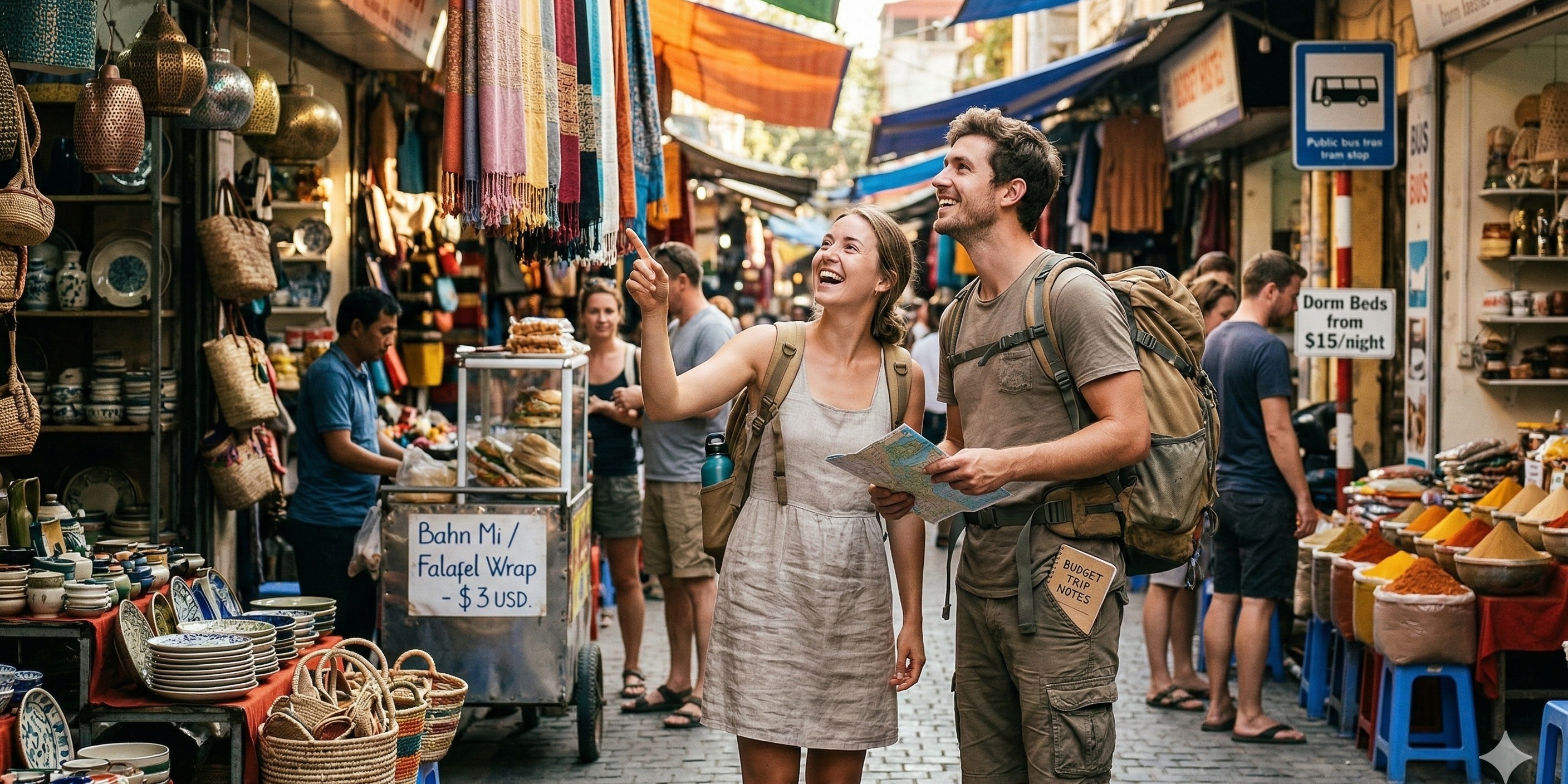
In Vietnam you can rent a motorbike, eat pho for breakfast and banh mi for lunch, sit down to a proper dinner with a drink, and sleep in a decent guesthouse, all for under $30. That isn't extreme penny-pinching. It's what things cost when you pay local prices instead of tourist prices.
Plenty of wonderful countries work out at $25 to $50 a day per person once you eat, sleep and travel the way locals do. You aren't settling for second best to save money. Several of the countries below are among the most beautiful and interesting places on earth. They are cheap because local wages and prices are low, not because the experience is worse.
For each country you'll find realistic daily costs (not the lowest number someone once managed), what that money gets you, and why the place is worth going to for more than its prices.
All daily budgets below are per person and cover accommodation, three meals, local transport, and one or two small activities or drinks. They leave out international flights, visa fees and travel insurance, which you should budget for separately. The "budget" tier assumes hostel dorms or simple guesthouses. The "comfortable" tier assumes private rooms in mid-range guesthouses or budget hotels.
Southeast Asia
Vietnam tops almost every serious list of budget destinations, and price is only part of the reason. The street food is superb, with pho, banh mi, bun cha, com tam and cao lau changing as you move between regions. The scenery keeps shifting too, from Hanoi's Old Quarter and the limestone islands of Ha Long Bay to Hoi An's lantern-lit riverfront and the beaches of the south. Add buses, hostels and tours that are easy for backpackers to use, and few countries give you more for your money.
Hostels from $5 to $8 per night in dorms are the norm in tourist areas. Private rooms in good guesthouses run $15 to $25. Street food meals are $1 to $3. A full dinner at a proper restaurant is $5 to $10. Local buses between cities cost $5 to $15; overnight sleeper buses save accommodation. Where people overspend is on tours sold to tourists and on beach areas in peak season, such as Phu Quoc or Da Nang in July. To keep costs down, eat at plastic-stool places without English menus, compare the booking-site price with the guesthouse's own rate, and take trains or local buses instead of tourist shuttles.
Cambodia runs on US dollars as much as its own riel, so budgeting is simple and you rarely need an ATM. The big draw is Angkor. The temples outside Siem Reap are one of the great wonders of the world, and a 3-day pass ($62) lets you explore dozens of them spread through the forest. Private rooms in Siem Reap guesthouses cost $5 to $15 a night, and the town itself has become a relaxed, easy place to stay.
Beyond Angkor, Phnom Penh's Tuol Sleng Genocide Museum and the Choeung Ek killing fields are hard to visit but important for understanding the country. Down south, Kep and Kampot are quiet, pretty and very cheap. Fewer tourists come to Cambodia than to Vietnam or Thailand, so rural areas have fewer facilities, but the places you find feel less packaged. Cambodian food, such as fish amok, lok lak and nom banh chok, gets little attention abroad and deserves more. A meal at a local spot costs $2 to $4.
Thailand costs a little more than Vietnam or Cambodia but is still a budget destination, and it has more variety and better transport than either. Bangkok has superb street food at street prices, great temples and museums, and a Skytrain that makes getting around cheap and quick. Chiang Mai in the north is calmer, with excellent food, mountain treks and a big community of remote workers who fill its cafes and coworking spaces. If you want to see elephants there, choose a sanctuary that doesn't offer rides or shows.
The islands (Koh Samui, Koh Lanta, Koh Tao, Krabi) are Thailand's most famous draw and also its most expensive area. Budget guesthouses on popular islands start at $20 to $35/night for a private room in high season. Island-hopping adds up fast. The cheapest way to see Thailand well is to combine Bangkok and Chiang Mai with a single island. The Destination Thailand Visa lets remote workers stay up to 180 days per entry, long enough to rent by the month and pay local prices.
Indonesia has more than 17,000 islands, and costs vary hugely between them. Bali is much pricier than it used to be, especially in Canggu and Seminyak, where a flat white in a trendy cafe can cost what it would in a European city. For budget Bali, stay in Ubud (private rooms from $20 to $35 a night) or head north to Amed or Lovina, which are far cheaper and quieter. Java, the most populous island and home to Yogyakarta, Borobudur and the Ijen volcano, costs much less than Bali and sees a fraction of the visitors.
Indonesian food, from nasi goreng and mie goreng to rendang, satay and gado-gado, is excellent, changes from island to island, and costs very little at warungs, the small family-run eateries. A full warung meal is $2 to $4. The same food in a tourist restaurant in Bali's busy areas costs three to five times as much. To keep costs down, eat where locals eat, stay a little outside the busiest neighborhoods, and avoid Bali in July and August, when prices jump.
South Asia
No country packs more into a small budget than India. Rooms, food and transport cost far less than almost anywhere else, and the variety is enormous. You can go from Rajasthan's painted havelis and desert forts to Kerala's backwaters, from sunrise over the ghats of Varanasi to the boulder-strewn ruins of Hampi, and from the tea hills of the Western Ghats to the high Himalayan valleys of Ladakh.
First-timers should expect a tough first few days. Roads, trains and services vary a lot between regions, and the noise, heat, crowds and smells can be a lot to take in. Scams aimed at tourists are common around big railway stations and famous monuments. None of that is a reason to stay away. Just go with realistic expectations and, if possible, give it at least two or three weeks. The people who fall for India are nearly always the ones who stayed long enough to get past the first shock.
For adventure on a budget, nowhere beats Nepal. The Annapurna Circuit, Annapurna Base Camp, the Everest Base Camp trek and the Langtang Valley are all within reach. On the trail, teahouse beds and dal bhat, the rice-and-lentil meal that trekkers live on, come to $20 to $30 a day, and refills of dal bhat are usually free. Kathmandu and Pokhara, the two main bases, are fascinating in their own right, cheap, and full of good places to eat.
Budget for a few extra costs. Since 2023, Nepal's rules have required foreign trekkers in most national parks and conservation areas to hire a licensed guide. Enforcement varies by region, but plan for it, and budget roughly $25 to $35 a day. On top of that come permits: the Annapurna Conservation Area permit and TIMS card, or the Sagarmatha National Park and local municipality fees for the Everest region, usually $30 to $60 in total. Also plan rest days to acclimatize on high treks. They add days, and cost, to the trip, but skipping them is how people end up with altitude sickness.
Eastern Europe and the Caucasus
For what you get, Serbia may be Europe's biggest bargain. Belgrade is a lively city: old-style restaurants on cobbled Skadarlija street, sunset from the Kalemegdan fortress, cafes as good as any in Western Europe, and a busy music and festival scene. Novi Sad, home to the EXIT festival, is charming and even cheaper. Subotica has beautiful Art Nouveau buildings, and the Tara and Kopaonik mountains are good for hiking and skiing. Serbia is outside the Schengen Area, so days spent here don't count toward your 90-day Schengen limit, which makes it a handy place to pause on a longer European trip.
Georgia pairs prices close to Southeast Asia's with European-style comfort and one of the world's great food and wine traditions. Tbilisi's old town looks like nowhere else: carved wooden balconies, domed sulfur bathhouses, and Soviet concrete next to Orthodox churches. A Georgian feast, the supra, with its natural wines and endless toasts, is reason enough to visit. Outside the capital, the Caucasus mountains of Kazbegi, Svaneti and Tusheti are among the most spectacular high country in Europe. Citizens of around 90 countries, including the US, UK and EU, can stay up to a year without a visa, and Georgia isn't part of Schengen. Low prices, great food and easy long stays make it one of the best travel deals around.
Latin America
For culture on a budget, Colombia is hard to beat in the Americas. Medellín has its cable cars, spring-like weather and busy food scene. Cartagena has a walled colonial center on the Caribbean. In the Coffee Region (Eje Cafetero) you can stay on a farm among steep green hills. Bogotá has excellent museums, including the Gold Museum, and a strong restaurant scene. The Pacific coast and the Amazon reward travelers who like wild places. To save money, eat the almuerzo, a set lunch of soup, a main and a drink, which local restaurants serve for $3 to $6. Have it every day and you'll eat well for very little.
Bolivia is South America's cheapest country to travel by a wide margin, and some of what you'll see there exists nowhere else. The Salar de Uyuni, the world's largest salt flat at more than 10,000 square kilometers, looks unreal, especially in the rainy season when a thin sheet of water turns it into a giant mirror. La Paz sits in a steep canyon at around 3,650 meters, with the high plains of El Alto above it. And the Bolivian side of Lake Titicaca is quieter and cheaper than the Peruvian side.
The main practical consideration: altitude. La Paz, Potosi, and the salt flat region are all above 3,500 meters. Altitude sickness, called soroche locally, is common in the first two or three days, bringing headaches, tiredness and breathlessness. Take it easy for at least a day after arriving in La Paz. Many travelers find coca tea, the local remedy, helps, and most people adjust within a couple of days. If symptoms get worse, go lower and see a doctor.
North Africa and the Middle East
Morocco is about an hour by ferry from southern Spain, yet it costs far less than Europe, which makes it an easy budget trip for European travelers. Marrakech's medina, the maze-like old city, is overwhelming in a good way. Its souks sell spices, leather and lanterns. Plain doorways open onto riads with tiled courtyards, fountains and carved plaster. From rooftop cafes you can watch Djemaa el-Fna square fill with storytellers, musicians and food stalls after dark.
Beyond Marrakech: Fes has a medina even more ancient and complex than Marrakech's. Chefchaouen, the blue-painted town in the Rif Mountains, is lovely in photos and even nicer in person. Near Merzouga you can ride camels into the Sahara and sleep at desert camps to suit most budgets. Moroccan cooking, from tagines and couscous to pastilla and mint tea, is one of the world's great cuisines and very cheap at local restaurants. In the souks, haggling is expected, so treat it as part of the fun.
The real question is whether a place gives you a great trip at a price you can keep up for long enough to enjoy it. Three weeks in Vietnam at $30 a day will give most people more than five days in Paris at $180 a day. For cost against experience, Vietnam, Cambodia, India and Nepal are still hard to match anywhere in 2026. The Balkans (Serbia, Albania, North Macedonia) are catching up, and Georgia offers far more than its prices suggest. Pick a place that suits your budget, stay long enough to settle in, and you'll have a better trip than many people who spend three times as much.