Solo Travel in 2026: A First-Timer's Guide to Safety, Costs, and the Best Destinations
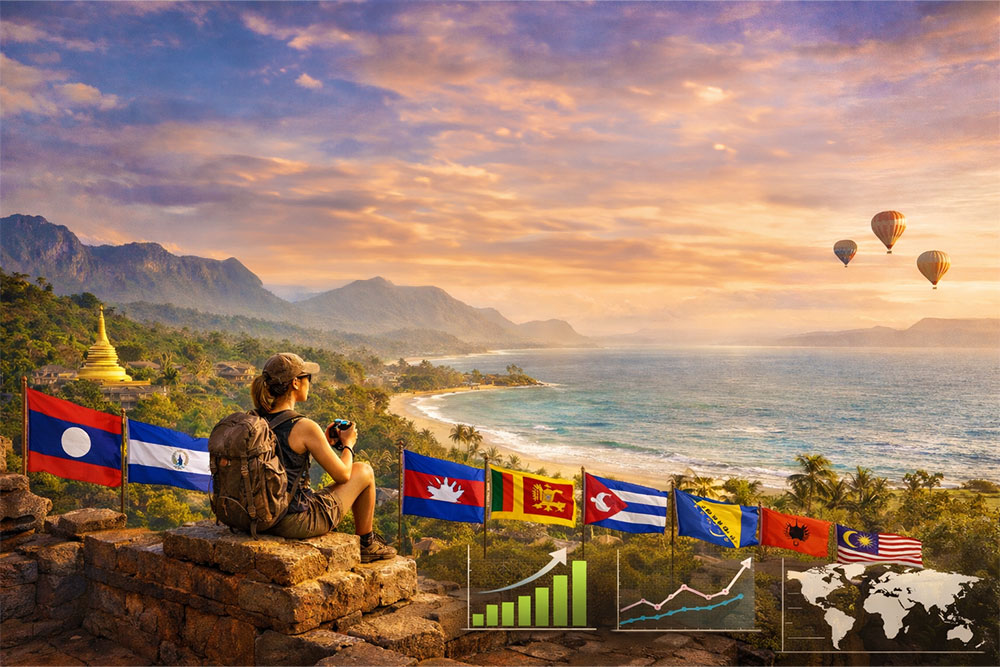
For me, the best thing about traveling alone isn't adventure. It's freedom. You can sit in a cafe for three hours with a book, order another coffee without asking anyone, and leave when you feel like it. Before a first solo trip, most people worry about safety and loneliness. What many find instead is a quiet sense of liberation.
Traveling alone does come with its own challenges. You have to think about safety differently. You can't split the cost of rooms or taxis. And loneliness is real, especially in the first few days before you settle in. This guide covers the hard parts as well as the good ones.
How Solo Travel Has Changed
More people travel alone every year, and a few changes have made it easier than ever to start.
The "slow travel" movement has shifted how solo travelers structure their trips. Instead of racing through five countries in ten days, more solo travelers now spend two to four weeks in one city, renting a flat, taking a class and living a sort of temporary life. There's less packing and planning, and it's easier to make real friends. For a first trip especially, one city for at least a week is far less overwhelming than a multi-country dash.
Hostels have also improved a lot. The picture of grubby dorms and grim shared bathrooms is out of date in most places. In popular solo destinations, pod-style beds with privacy curtains, a charger at every bed, air conditioning and pleasant common areas are now normal. The top-rated hostels in Bangkok, Lisbon, Chiang Mai and Medellín are good places to stay, not just cheap ones. With shared dinners, walking tours and organized outings, meeting people takes very little effort.
And smartphones have taken away much of the fear of getting lost. Losing your way in a foreign city used to be a real problem. Now you open a map. That alone has made traveling alone far less daunting.
The Three Biggest Solo Travel Myths
Myth 1: Solo Travel Is Lonely
It can be, but the lonely patches usually pass. The first day or two in a new city, when you don't know anyone, can feel isolating. After that, many solo travelers find they meet more people, locals and travelers alike, than when they travel with friends. Someone eating alone at a ramen counter in Tokyo is easier to talk to than a group of four at a table. Sit down in a hostel common room and you'll often be chatting within ten minutes. The loneliness is real, but it tends to come early and fade.
Myth 2: Solo Travel Costs Far More
It's more expensive per person than group travel for accommodation (no room splitting) and occasionally transport (no fare sharing). But solo travelers also tend to spend less on food because they eat more simply and more locally, and they have complete flexibility to find better deals, change plans to cheaper options, and move on quickly when somewhere is too expensive. Traveling alone does cost more, but not by as much as people fear. In my experience it's about 10 to 20% more per day than the same trip shared with a partner.
Myth 3: Solo Travel Is Dangerous
This one requires nuance rather than dismissal. Traveling alone carries different risks. Nobody is there to notice something's wrong or to help if it goes badly, and in some places you may look like an easier target. Those are real concerns. But millions of people travel alone every year without trouble, because the risks can be managed. Choose destinations carefully and stay alert, as explained in the safety section below.
Best Solo Travel Destinations in 2026
I've grouped these by budget, because a "best for solo travel" list that ignores cost isn't much help.
Best Budget Solo Destinations ($25 to $50/day)
Chiang Mai, Thailand
The best city I know for a first solo trip. It has a huge community of travelers and expats, great hostels, very cheap food, easy navigation and enough to do for weeks. The Sunday Walking Street, cooking classes, and temple day trips all create natural social opportunities. Daily costs $35 to $55 on a comfortable budget.
Hanoi, Vietnam
Vietnam's northern capital has one of the densest solo traveler communities in Southeast Asia, particularly in the Old Quarter. Budget hostels from $8 a night, pho for $1.50, and excellent organized day trips to Ha Long Bay and Ninh Binh. Street food stalls with shared tables make it easy to start conversations. Use Grab to get around.
Belgrade, Serbia
Europe's most underrated city for traveling alone. It has sociable hostels, busy cafes and plenty going on in the evenings. There are fewer travelers than in Southeast Asia, but low prices, great food and very friendly locals make it excellent value.
Medellín, Colombia
Medellín is far safer than it was, and it now has a big solo travel scene. Laureles and El Poblado are full of hostels, cafes and social events for travelers. Take a salsa class, ride the cable cars up to the hillside neighborhoods, and take a day trip to Guatapé. Be careful at night, and use caution with dating apps, where scams targeting foreigners have been reported.
Best Mid-Range Solo Destinations ($55 to $100/day)
Tokyo, Japan
Japan may be the easiest country in the world to travel alone. Eating by yourself is completely normal, and many ramen shops are built around single-seat counters. Getting around is easy, the city is very safe, and its hugely varied neighborhoods are perfect for exploring at your own pace. It costs more, but you get a lot for your money.
Lisbon, Portugal
Despite rising prices, still one of Europe's best cities for traveling alone. It's walkable and beautiful, with a huge number of hostels and co-living spaces full of other travelers. The miradouros, the hilltop viewpoints, are natural places to meet people at sunset. Eating alone at a tasca, a small traditional restaurant, is completely normal.
Barcelona, Spain
Pricey, but great for solo travelers, thanks to a huge international crowd, a sociable beach scene, lots of good hostels and the Eixample's easy grid of streets. In summer, book your bed and Sagrada Familia tickets well ahead, and watch your phone, because pickpockets are common.
Mexico City, Mexico
Mexico City has become one of the best cities in the Americas for traveling alone. Roma and Condesa are perfect for wandering on your own. There are great coworking spaces and plenty of hostels, and the food scene, with its busy taco stands and markets, makes it easy to strike up conversations.
Safety Tips for Solo Travelers
A lot of safety advice is vague and reassuring without telling you what to do. These are the habits that have worked for me.
The Single Most Effective Safety Habit
Tell someone your plans and check in regularly. It sounds basic, but few people do it every time. Before each trip, I send my accommodation details, flight numbers and a rough daily plan to one person at home, and I message them whenever I reach a new city. It costs nothing, and if something goes wrong and nobody can reach me, someone knows where to start looking.
Guard Your Phone
Keep your phone in a front pocket or a closed bag when you're not using it, especially in crowds, markets and on public transport. Much of the theft travelers experience is a phone snatched from a hand or lifted from a pocket. That happens in Barcelona, Rome, Paris and Amsterdam as much as anywhere. Your phone is your map, your wallet and your lifeline, so protect it out of habit.
Accommodation Location Matters More Than Price
When I book for a solo trip, I care more about the neighborhood than the price. An $8 hostel that means a 20-minute walk alone at night is less safe, and less fun, than a $15 one five minutes from where the evening action is. Read reviews for comments on how the area feels after dark, not just on the rooms. The r/solotravel community on Reddit often has more up-to-date safety discussions than guidebooks.
Trust Your Instincts Faster Than You Think You Should
New solo travelers often doubt their instincts, unsure whether they're sensing real danger or just nerves in an unfamiliar place. My rule is simple: if something feels wrong, act. Leave the bar. Skip that taxi. Cross the street. If you were wrong, the cost is a moment of awkwardness or a longer walk. If you were right, it could matter a lot. Your instincts get sharper the more you travel. Until then, trust them.
For Women Traveling Alone
Women traveling alone face some specific risks. For destination-by-destination advice from other women, I rely on the r/solotravel and r/TravelWomen communities on Reddit and the Solo Female Travelers Network on Facebook. They're more current and detailed than most guidebooks. In practice: find out what your accommodation's neighborhood is like at night before you book, choose places with a 24-hour front desk where you can, and consider female-only dorms. In places where street harassment is common, such as parts of Egypt, Morocco and India, a light layer to cover up and minimal jewelry can cut down unwanted attention a lot.
How to Meet People When You Travel Alone
This is what people ask me most before a first solo trip. Oddly, those who worry most about being alone often meet the most people, because the worry pushes them to make an effort. The ones who end up lonely are usually the ones who stay in their room.
What works best:
Stay in a hostel, even just for the first few nights. No other choice makes meeting travelers easier. Common rooms, hostel bars and organized events do most of the work for you. If you hate the idea of a dorm, book a private room. Most hostels have them, and you can still use all the shared spaces.
Book one organized activity early in each destination. A cooking class, a walking tour, a day trip. They put you in a small group with other people, often also alone, who share at least one interest with you. Some of my longest-lasting travel friendships started in 10-person cooking classes, because you can't help talking to each other.
Eat at the bar or counter rather than a table. In places where eating at the counter is common, like Japan, Spain, Portugal and much of Latin America, sitting at the bar instead of a table for one changes everything. It shows you're open to a chat in a way a corner table doesn't.
Use apps and groups. Couchsurfing's events, Facebook groups for travelers and expats in a particular city, Meetup, and Bumble's friend-finding mode have all led to real friendships for me and people I know. They're not perfect, but 20 minutes of effort usually gets results. Meet new people in busy public places first.
Real Solo Travel Cost Breakdown
| Destination Type | Daily Budget Solo | Notes |
|---|---|---|
| Budget SE Asia (Vietnam, Cambodia, Laos) | $28 to $45/day | Hostel dorms $6 to $15/night, street food all day |
| Mid-range SE Asia (Thailand, Bali) | $40 to $70/day | Private guesthouse room, mix of local and tourist meals |
| Budget Europe (Serbia, Albania, Romania) | $40 to $70/day | Hostel or budget hotel, cheap local food |
| Mid-range Europe (Portugal, Spain) | $65 to $110/day | Budget hotel or hostel private, mid-range restaurants occasionally |
| Japan / Australia / Nordic | $80 to $150/day | Higher baseline accommodation and food costs |
| Latin America (Colombia, Mexico) | $45 to $85/day | Wide range; Medellín cheapest, Rio most expensive |
Paying for a room on your own is the biggest extra cost. A $60 room costs you the full $60 instead of $30. You can win some of it back by eating at street stalls and local spots instead of sit-down restaurants, staying in hostel dorms or private rooms, and being free to grab a deal the moment you see one.
Packing for Solo Travel
Pack light. Every travel list says it, and most first-timers ignore it and regret it by the end of day one. When you're alone, there's nobody to watch your bag while you buy a ticket or help you carry it up stairs. Travel light and you move faster, skip baggage fees and cope easily with stairs and cobblestones. My rule: if I'm not sure I'll use it, it stays home. I've done two-week trips with a 20-liter backpack.
A few extras worth packing when you're on your own: a portable door lock (gives you extra security in hotel rooms regardless of quality), a small padlock for hostel lockers, a filter water bottle such as a LifeStraw, which saves money and plastic, and a small first aid kit with basic medicines, because hunting for a pharmacy at 10 PM while ill and alone is miserable.
Traveling alone suits people who enjoy their own company, can adapt when plans go wrong, and are willing to say hello first now and then. It isn't right for everyone at every point in life. If being alone feels painful right now, a solo trip may make that worse. If you're craving freedom and a bit of adventure, it will probably give you more than you expect. Start with 5 to 7 days somewhere with plenty of other solo travelers: Chiang Mai, Lisbon or Medellín on a budget, Tokyo or Barcelona if you can spend more. Your first trip is nearly always the hardest. That's normal. Get through day two, and it gets easier.