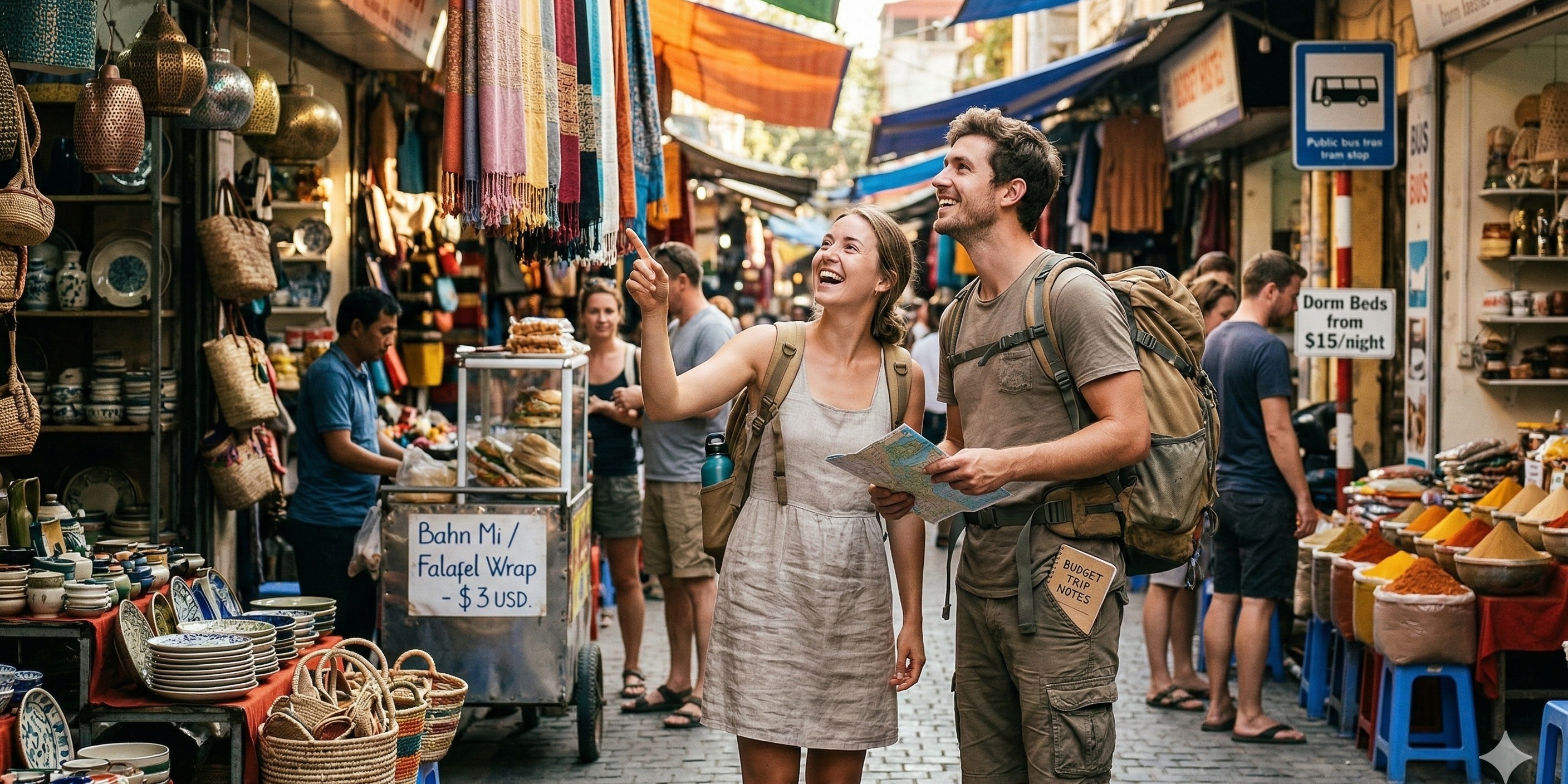
Best Countries to Visit in 2026: 10 Trending Destinations With Low Crowds, Cheap Flights, and Easy Visas
Santorini, Paris and Bali still top most travel wish lists, and all three are struggling under the weight of it. Queues are long, prices keep climbing, and the famous viewpoints are often more crowd than view.
None of them is a bad place to go. The trouble is that when millions of people scroll the same feeds and book the same trips, every pretty spot gets a queue and every little-known cove ends up with a gift shop. For years I've tried to get to places before that happens. These are the ten countries I'd point people to in 2026 if they want what Santorini promises without the prices or the crowds.
I'll be upfront: I haven't been to every single country on this list in the last twelve months. For the ones I haven't personally visited recently, I've relied on research from Skyscanner's 2026 travel trends report, the Lonely Planet Best in Travel list, and communities like r/solotravel and r/digitalnomad on Reddit where real travelers share real experiences. I'll tell you clearly when I'm speaking from personal experience versus aggregated research.
How I Chose These Countries
Plenty of "best countries" lists are paid placements, or were written after one press trip years ago. I set four simple tests. Getting a visa had to be easy for most passport holders. Flights had to be reasonably priced in 2026. Crowds had to be clearly thinner than at the famous alternatives. And the trip had to be worth the effort once you got there.
I also looked at what has changed recently: new flight routes, looser visa rules, and places where search interest is climbing faster than new hotels and tour companies can open. That gap is the sweet spot. You get to see a place before it is packaged for mass tourism.
| Country | Daily Budget (USD) | Visa Ease | Best For |
|---|---|---|---|
| Georgia | $30 to $60 | Up to 1 year visa-free for many passports | Wine, mountains, culture |
| Vietnam | $20 to $45 | E-visa open to all nationalities | Food, history, beaches |
| Serbia | $35 to $65 | 90-day visa-free for many passports | City breaks, food, value |
| Colombia | $40 to $80 | No visa required for most Western passports | Coffee, cities, nature |
| Oman | $50 to $100 | Visa on arrival / e-visa widely available | Desert, coast, safety |
| Philippines | $35 to $70 | 30-day visa-free for many nationalities | Islands, diving, beaches |
| Morocco | $40 to $75 | Visa-free for many passports, 90 days | Culture, food, architecture |
| Albania | $30 to $55 | Visa-free for EU + many others | Coastal, mountains, value |
| Mexico (Mexico City) | $45 to $85 | Visa-free for many passports; a valid US, UK, Schengen or Canadian visa also works for many others | Food, culture, architecture |
| Malaysia | $30 to $65 | Visa-free for 30 to 90 days for many nationalities | Cities, food, nature, beaches |
The 10 Countries
If I could send people to only one country in 2026, it would be Georgia. I know "underrated" is an overused word, but mass tourism really hasn't arrived here yet. It will, and probably soon.
The country sits at the crossroads of Europe and Asia, with snow-capped Caucasus mountains, a Black Sea coastline, ancient cave towns carved into cliff faces, and some of the best value wine in the world. Archaeologists have traced winemaking here back about 8,000 years, and the traditional qvevri method, fermenting in buried clay jars, produces amber wines that taste nothing like the usual French or Italian bottles. A good bottle from a cellar in Kakheti costs about $8. The same bottle in a London wine bar would run $45.
Tbilisi is a beautiful, slightly crumbling capital whose old town reminds me of Istanbul and Lisbon at once. Citizens of roughly 90 countries, including the US, UK and EU, can stay up to a year without a visa. Daily costs in Tbilisi are $30 to $50 if you're eating locally and staying in a mid-range guesthouse. A flight from Europe is often under $100 round-trip from Berlin or Warsaw. From farther away you'll pay more, but Turkish Airlines, flydubai and Wizz Air all fly to Tbilisi, which helps keep fares down.
Vietnam matches Thailand on price, and away from the main backpacker trail it feels less commercial. The food is reason enough to go: pho in Hanoi, banh mi in Hoi An, seafood in Da Nang, com tam in Ho Chi Minh City. Every region cooks differently, so you can eat your way down the country for weeks without getting bored.
Getting in is easy. Since 2023, Vietnam's e-visa has been open to every nationality. A 90-day single-entry visa costs $25 and usually takes 3 to 5 working days. The official Vietnam e-visa portal is where you apply. You don't need to visit an embassy. Ha Long Bay and Hoi An's Ancient Town do get crowded, but the country is long enough that there is always a quieter bay or town nearby, such as Lan Ha Bay or the rice terraces around Ha Giang.
One warning: in the busiest tourist areas, touts and vendors can be pushier than in Thailand, and taxi and market overcharging is common. Download Grab before you land and use it for rides. In tourist areas, check menu prices before you sit down. Do those two things and Vietnam is an easy, rewarding country to travel.
Belgrade is one of Europe's best city breaks, and surprisingly few people know it. It has a lively evening scene that stays busy until late, food that blends Turkish and Central European cooking, a riverfront you can walk for miles, and prices that make Western Europe look silly. A good restaurant dinner in Belgrade costs $12 to $20 per person. A coffee in a cafe in the Savamala riverside district costs around $2. A comfortable boutique hotel comes in at $50 to $80 per night.
Serbia is outside both the EU and the Schengen Area. Many passport holders get 90 days visa-free without any Schengen paperwork, and a valid Schengen, UK or US visa also lets many other nationalities enter (check the current list before you travel). Being outside the EU also keeps Belgrade off the radar of most weekend-break crowds, who head to Amsterdam, Prague or Lisbon instead. That won't last forever.
Colombia has changed enormously over the past decade, but many people still picture the country of old news reports. Medellín, once described as one of the most dangerous cities on earth, now has an excellent metro and cable car network, a strong food and coffee scene, and hillside neighborhoods that city planners from around the world come to study.
Colombia's coffee region is one of the most scenic landscapes in South America, and the colonial architecture of Cartagena rivals anything you'd find in southern Spain. For many Western passport holders, Colombia requires no visa at all for stays up to 90 days. Direct flights from Miami take under three hours. From Europe, Avianca, Iberia and Air Europa fly direct from Madrid to Bogotá, and there are also direct flights from London and Paris. The main tourist areas are much safer than they used to be, but use big-city common sense everywhere, especially at night.
Almost everyone who visits Oman comes home raving about it, yet few people think of going. You get desert dunes, a clean and empty coastline, old forts, swimmable wadis, and one of the safest records in the region. Unlike the UAE next door, Oman hasn't built its tourism around record-breaking towers and malls. It feels rooted in its own traditions, and Omanis are known for making visitors feel welcome.
Most nationalities can get a straightforward e-visa through the Royal Oman Police e-visa portal valid for 30 days and extendable, and many nationalities can also enter visa-free for 14 days. Oman is not the cheapest country here, but you get a lot for your money. Rent a 4x4, spend a night in the Wahiba Sands, then take the coast road to Sur and Ras al Jinz, and you'll see what I mean.
The Philippines has more than 7,000 islands, and most visitors see two or three and leave wanting more. Palawan regularly shows up on lists of the world's most beautiful places, thanks to its lagoons, limestone cliffs and clear water for diving and snorkeling. Siargao has been drawing surfers and remote workers for years, but it's still nowhere near as busy as Bali.
The practical challenge with the Philippines is transport between islands. It relies primarily on domestic flights, which can add up if you're island-hopping aggressively. Allow $40 to $80 per domestic flight when you plan your budget. Food is very cheap if you eat where locals do: $3 to $6 for a full meal at a turo-turo canteen. English is widely spoken, which makes getting around easy.
Morocco has been on travelers' radar for a while, but outside of Marrakech and Chefchaouen (the blue city), huge parts of the country are still quiet. Head to the Sahara in the southeast, the windy Atlantic town of Essaouira, the old medina of Fes, or the villages of the Atlas Mountains. The further you go from the postcard spots, the more Morocco gives back.
Flights from Europe are very cheap, often under $80 round trip from Madrid, Lisbon or Paris with Ryanair, easyJet or Royal Air Maroc. From North America and Africa you'll pay more, though flights from West Africa are fairly short. Moroccan food is a big highlight: tagines, pastilla, harira soup, msemen flatbread. You can eat well on $10 to $15 a day.
Albania is where Croatia was 15 years ago. The coast is developing fast, but prices still feel like they belong to another decade. The Albanian Riviera, particularly the area around Dhermi and Himara, offers turquoise water and dramatic scenery that rivals Greece at roughly 40% of the cost. Budget travelers can find decent accommodation within walking distance of the sea for $25 to $40 per night during the summer season.
Inland Albania is even better, and you'll see few other tourists. Berat and Gjirokaster, both Ottoman-era towns on the UNESCO list, still feel lived in rather than staged. Be ready for some rough edges: potholed roads, patchy bus timetables and not much English in small towns. If you don't mind improvising, it's a rewarding country to explore. My guess is you have three to five years before it gets as busy as its neighbors.
I'll admit Mexico City is an odd fit for a "low crowds" list, since the metro area is home to more than 20 million people. It makes the cut because flights are often cheap and there is so much to do. It stands up to cities that cost three times as much.
Start with the food. Street stalls sell tacos, tamales and tlacoyos on almost every corner, and the city also has some of the best restaurants in the Americas. Roma and Condesa, with their tree-lined streets and cafes, feel a little like a calmer, cheaper Paris. The Museo Nacional de Antropologia is one of the great museums of the world, with superb Aztec and Maya collections. From most of the US and Canada it is a three to five hour flight.
Malaysia is the perpetually overlooked member of the Southeast Asia itinerary. Most travelers pass through Kuala Lumpur for a night or two on the way somewhere else, which means they see the Petronas Towers, eat a good hawker meal, and leave thinking they've "done Malaysia." They haven't. George Town in Penang is one of Asia's great food cities, and locals will tell you, with some justification, that its hawker food beats Singapore's for a fraction of the price. In Malaysian Borneo you can still walk through ancient rainforest and see orangutans in the wild, which few places on earth can offer.
Visa rules are generous. Many nationalities get 30 to 90 days on arrival, though everyone has to fill in the free online Malaysia Digital Arrival Card before landing, and Nigerians and some others need an eVisa. Buses, trains and budget flights make getting around simple. Malay, Chinese and Indian cooking all live side by side here, and I've been three times without running out of things to eat or places to see.
What Didn't Make the List (And Why)
A few places came close. Here is why they missed out.
Bali: Still lovely, but it fails the "low crowds" test by a mile. Canggu is so full of coworking spaces and laptop cafes that it can feel like a campus. Quieter parts of the island are still special, but Bali no longer fits a list like this one.
Portugal: Still beautiful and still a great trip, but prices in Lisbon and Porto have climbed fast in recent years, and rents and hotel rates especially. It isn't the bargain it was a decade ago.
Japan: Left off only because it deserves a guide of its own. Many nationalities can visit visa-free, Japan's online eVISA has made the process easier for some who can't, and I'd put it among the best trips in the world at any budget. See our full Japan guide for a complete breakdown.
How to Find Cheap Flights to These Countries
A quick word on flights, because they often make or break the budget. For most of these countries, here's what I do: set fare alerts on Google Flights for your origin to the destination with flexible dates, check Skyscanner's "everywhere" tool when you have a travel window but not a destination, and look specifically at shoulder-season dates (about 6 to 8 weeks before school holiday periods start). Many of my best fares have been midweek departures, which usually dodge the weekend price bump.
From Nigeria, the cheapest connections to Southeast Asia and the Balkans usually go through Istanbul (Turkish Airlines), Dubai (Emirates, flydubai), Doha (Qatar Airways) or Addis Ababa (Ethiopian). For Georgia, Turkish Airlines via Istanbul has usually been the best-value option when I've searched.
In my experience, the sweet spot for a destination is the first year or two after it starts appearing on "best of" lists. Georgia, Serbia and Albania are there now. Colombia and Vietnam are a little further along but still great value. If Albania or Georgia is on your list, try to go in the next couple of years.