Bangkok Travel Guide 2026: Why Thailand's Capital Is the Most Searched Travel Destination in the World Right Now
Bangkok can knock you sideways on a first visit. The heat hits you as soon as the airport doors open, the traffic is like nothing most of us have seen, and there are enough neighborhoods, food stalls and temples to keep you busy for weeks. A loose plan helps a lot. And each time you come back, you find another neighborhood, another market, another bowl of noodles you missed before.
Bangkok went into 2026 near the top of global travel search trends, and it deserves the attention. Budget travelers can eat well on $5 a day. Mid-range visitors get more hotel for their money than almost anywhere in Asia. The food and temples are as good as any city's. Many guides, though, either sell it with glossy Grand Palace photos or make it sound like Khao San Road is all there is. Neither is the city I know.
Here is what I would want to know before a first trip.
Why Bangkok in 2026
Bangkok has been one of the world's most visited cities for years. A few things have pushed it further lately. First, Thailand's Destination Thailand Visa (DTV) arrived in 2024 and lets remote workers and digital nomads stay up to 180 days per entry. You now meet far more people who live here for months at a time, working from cafes in Ari and Thonglor, than you did a few years ago.
Second, the Michelin Guide keeps adding Bangkok restaurants and street food stalls every year, which has made the city a serious stop for people who travel to eat. Third, flights from Europe, Africa and the Middle East are often reasonably priced. From Lagos, the Gulf airlines and Ethiopian regularly sell round trips well under $1,000 outside peak season if you book a couple of months ahead.
Public transport has also improved a lot. The extended MRT Blue Line, the new Pink and Yellow monorail lines and a longer BTS Skytrain network reach areas that once meant a taxi or tuk-tuk. You can now spend a week in Bangkok without haggling over a single fare, and for me that made the city far more relaxing.
What Bangkok Costs in 2026
Some budget figures online are far too hopeful. These numbers come from my own spending plus current 2026 prices.
| Category | Budget | Mid-Range | Comfortable |
|---|---|---|---|
| Accommodation (per night) | $12 to $25 (hostel/guesthouse) | $45 to $90 (hotel) | $100 to $180 (boutique/4-star) |
| Food (per day) | $8 to $15 (street food + local) | $20 to $40 (mix) | $50 to $80 (restaurants) |
| Transport (per day) | $3 to $6 (BTS/MRT + grab) | $8 to $15 | $20 to $35 |
| Activities (per day) | $5 to $10 | $15 to $30 | $40 to $80 |
| Daily Total | $28 to $55 | $88 to $175 | $210 to $375 |
The baht has mostly stayed between about 32 and 36 to the US dollar in recent years, which makes planning easier. Street food costs 40 to 80 THB per dish (roughly $1.20 to $2.30). A meal at a proper sit-down local restaurant runs 200 to 400 THB ($6 to $12). You only start paying Western prices if you eat at tourist-facing restaurants in Sukhumvit or near the Grand Palace.
Where you stay shapes your budget more than anything else. Base yourself on Sukhumvit Soi 11 and you will spend mid-range money without trying. Pick Ari or the Riverside area and your food money goes further, and you will usually eat better too.
For a comfortable but not extravagant week in Bangkok, budget around $700 to $900 all-in, including a mid-range hotel. If you're happy with clean guesthouses and street food most days, $400 to $500 is doable. Flights not included. For November through February, book your room early, because prices rise 20 to 30% and the good places fill up.
When to Go
The standard advice is: go November to February for cool, dry weather. That advice is sound, but those months are also peak season, with higher hotel prices, more tourists at every big sight and busier streets. If you care about value, consider going at another time.
March and April are very hot, often 35 to 38 degrees Celsius. Plan your days around the heat (temples in the morning, air-conditioned malls and cafes in the afternoon, and outdoor time after dark) and it is manageable. Hotels cost 20 to 30% less than in peak months. I once went in April expecting to suffer and had my best Bangkok trip, partly because Wat Pho was quiet enough to sit and take it all in.
The rainy season runs roughly June through October. Bangkok gets heavy downpours, but they're usually short and intense rather than all-day affairs. If rain doesn't bother you and budget matters, May and June offer a reasonable middle ground before the heaviest rains hit. October is also a strong value month.
Think twice about Songkran, the Thai New Year water festival in mid-April, unless you want to join in. The city goes wild, airports are swamped and hotel prices jump for the week. I like the idea of Songkran a lot more than I like being soaked on my way to dinner.
Where to Stay: Bangkok's Neighborhoods Compared
Plenty of guides list neighborhoods without saying who each one suits. Here is my take.
Sukhumvit
Bangkok's most international and most convenient neighborhood. The BTS Skytrain runs the length of it, so you're connected to everything. Accommodation ranges from budget hostels on the lower-numbered Sois to five-star towers near Asoke and Phrom Phong. It's also where Bangkok's best restaurant street, Thonglor, sits. The downside is that it doesn't feel very Thai. Parts of it could be any upscale Asian city. Good for first-timers who want convenience and don't mind paying for it.
Ari
This is my personal favorite neighborhood in Bangkok and the one I've been recommending to every friend who visits. Ari has the vibe of a trendy European neighborhood but with Thai street food prices. Young professionals, expats, and creative workers have turned the Sois (side streets) around Ari BTS station into a grid of independent cafes, local restaurants, art spaces, and boutique shops. It is quieter than Sukhumvit and much cheaper for food. Getting to the Old City temples takes about half an hour by Skytrain and a short taxi. If you want to feel like you live in Bangkok rather than visit it, stay in Ari.
Chinatown (Yaowarat)
Few places in Southeast Asia have as much atmosphere as Bangkok's Chinatown. Think gold shops, neon signs, and food stalls that pop up every evening along Yaowarat Road. It is loud, crowded and wonderful. Accommodation is limited and skews toward budget guesthouses, but Loy La Long Hotel is a beautiful boutique option right on the Chao Phraya if you want to stay here in some style. Expect noise until late and narrow lanes that take a day or two to figure out.
Riverside (Bang Rak)
The area around Charoen Krung Road and the Chao Phraya River is where old Bangkok meets the new creative class. Warehouse 30 and The Jam Factory have turned former industrial spaces into cultural venues. The Mandarin Oriental is here, as is Lebua at State Tower where they filmed The Hangover Part II. It's not the most convenient neighborhood in terms of BTS access, but if you're staying a week or longer and want a sense of historical Bangkok alongside the contemporary art scene, it's worth considering.
Khao San Road (Banglamphu)
Khao San Road is fine for a night and a poor base for a whole trip. The area is cheap, sociable and close to the Old City temples, but the street itself is a backpacker bubble with little to do with the rest of Bangkok. Tuk-tuk scams are common here. If you're a solo backpacker under 25 wanting to meet other travelers fast, it works. For everyone else, stay nearby in the quieter Samsen Road area instead and walk to Khao San when you want the atmosphere.
The Temples Worth Your Time and Money
Bangkok has hundreds of temples, and you do not need to see most of them. This is my shortlist.
The Grand Palace and Wat Phra Kaew: Yes, it's touristy. Yes, the entrance fee is 500 THB (about $15). Go anyway. There is nothing else like it in the city. Get there at 8:30 AM when the gates open, before the tour groups. Cover your shoulders and knees, or rent a sarong at the entrance for a small fee. Budget two hours minimum.
Wat Pho: A five-minute walk from the Grand Palace and home to the enormous Reclining Buddha, which is more impressive in person than any photo captures. Entrance is 300 THB. Afterwards, book a traditional Thai massage at the temple's own school, around 350 THB for 30 minutes. It is one of the nicest half hours you can spend in the city.
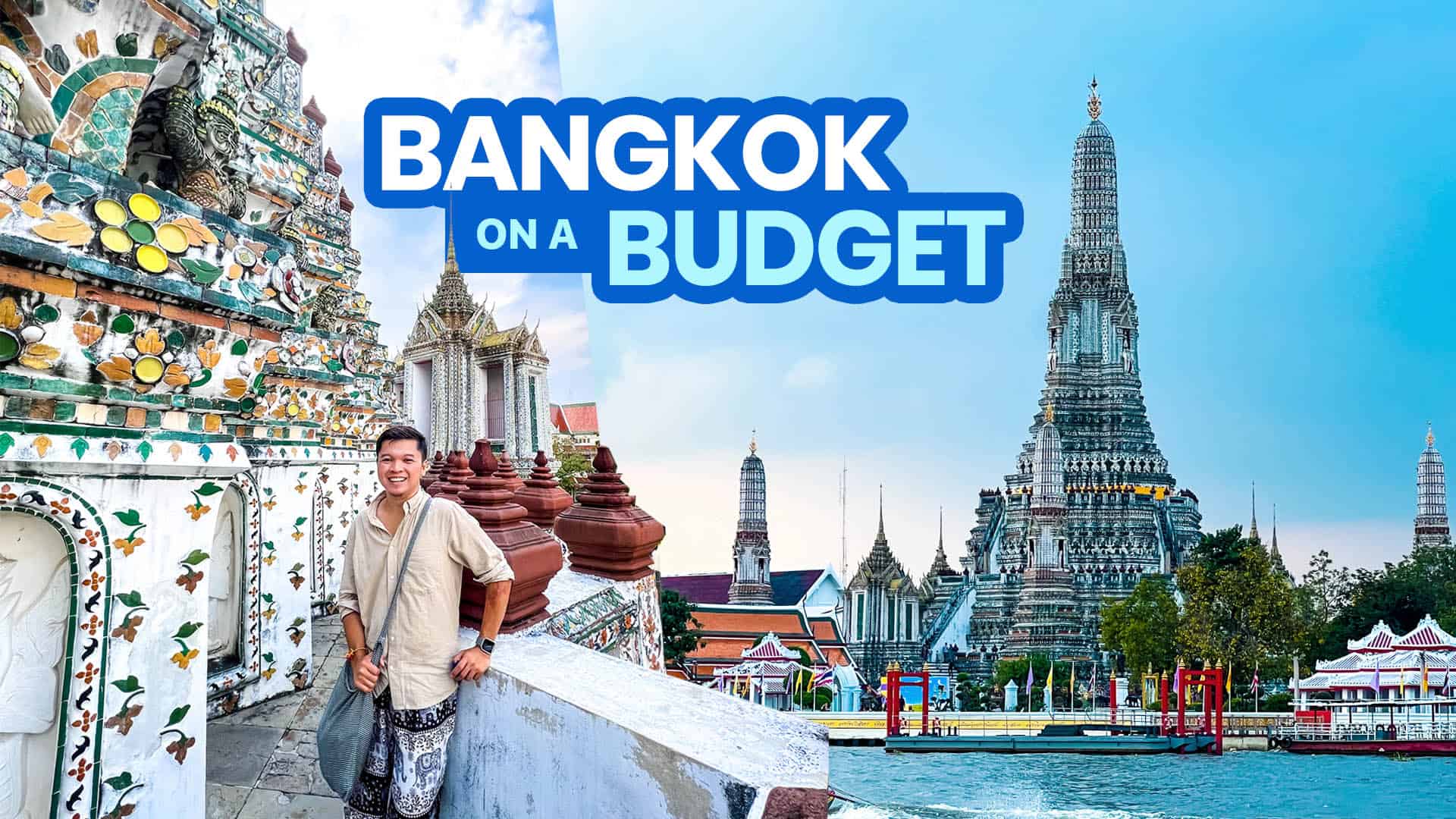
Wat Arun (Temple of Dawn): Take the cross-river ferry from Tha Tien pier for a few baht and pay around 200 THB to enter. The mosaic spires look best early in the morning or in late afternoon light. For sunset, cross back and watch the sun drop behind Wat Arun from one of the riverside terraces near Tha Tien.
Wat Saket (Golden Mount): Many first-timers skip this one, and I think it is the best-value temple in Bangkok. Climb the 344 steps to the golden chedi and you get a full circle view over the Old City and the skyline beyond. Entrance is 100 THB. Come at golden hour for the light. Crowds are thin compared to the Grand Palace area.
Talat Noi: Not a temple but worth mentioning here because it's the kind of atmospheric neighborhood most tourists walk right past. Wedged between Chinatown and the river, Talat Noi has Portuguese-era shophouses, Chinese shrines, street art on crumbling walls, and cafes that have opened inside century-old homes. It feels old and very lived-in at the same time.
The Food: What to Eat and Where
Bangkok food deserves its own guide, so here is the short version. There are really two food cities here. One serves the tourist favorites: pad Thai, green curry, mango sticky rice. The other runs on boat noodles, khao man gai, jok and krapao. Both are good, but the second is the one you will still be talking about years later.
Or Tor Kor Market near Chatuchak is the city's top fresh market. It is cleaner and calmer than most, the fruit is superb, and plenty of Bangkok's chefs buy here. Snack as you walk.
After dark, Chinatown's Yaowarat Road turns into one long street food show: seafood grills, roast duck, egg tarts, papaya salad. Come hungry and take your time. The Michelin Bib Gourmand-winning Jok Prince in Bang Rak serves the best rice porridge I've had in Asia. It opens early and closes when it sells out, usually before noon.
On Michelin dining: Bangkok has starred restaurants where lunch or dinner costs $30 to $60 a head, which is remarkably cheap by starred-restaurant standards. The Michelin Guide Thailand is updated annually and worth checking if fine dining is your thing.
Don't stop at Thai food, either. The Indian community around Phahurat makes excellent biryani. The Muslim neighborhoods near Charoen Krung serve halal food that would hold its own in Istanbul. There's a Japanese neighborhood in Sukhumvit with ramen shops that rival anything in Tokyo. Eat broadly.
Getting Around Bangkok in 2026
Public transport is good now, and I say that after years of sitting stuck in taxis. The BTS Skytrain and the MRT metro cover most places you will want to go, and a single trip costs roughly 17 to 65 THB depending on distance. For the BTS, buy a stored-value Rabbit Card at any station so you can skip the ticket queues. The MRT does not take Rabbit Cards, but you can tap in with a contactless Visa or Mastercard.
For getting to and from the airport: the Airport Rail Link from Suvarnabhumi to Phaya Thai (city center BTS connection) costs 45 THB and takes about 30 minutes. Take it. On my first trip I took a taxi instead and sat in traffic for 90 minutes, paying four times as much.
Where the trains don't reach, use Grab, Southeast Asia's version of Uber. You see the price before you book, so there's no haggling. I only take tuk-tuks for short rides for the fun of it now, because Grab is almost always cheaper and there are no surprises.
The canal boats (Khlong Saen Saep express boat) are an underrated way to move across the city quickly. The 15 THB ride from Pratunam to Bang Kapi takes you past neighborhoods you would never otherwise see, and at rush hour it beats anything on the roads.
Airport to city: Airport Rail Link, 45 THB, 30 minutes. Daily transport: BTS/MRT Rabbit Card. Rides off the network: Grab app. Scenic or cross-canal trips: Khlong Saen Saep express boat. Night trips: Grab or BTS if running. Tuk-tuks: short scenic rides only, always agree price first.
Safety in Bangkok: The Real Picture
Bangkok is a safe city for visitors, and violent crime against tourists is rare. What you will run into are scams, and the same few come up again and again. Learn them before you go and you'll save yourself money and irritation.
The Grand Palace "closed today" scam is the most famous. A friendly stranger near the Grand Palace tells you it's closed for a Buddhist holiday and offers to take you to a different temple first. The palace is never closed to tourists during opening hours. Walk past anyone who approaches you near the entrance with this story.
Tuk-tuk gem scams still operate in the Old City area. A driver offers you a very cheap tour, makes stops at "friend's" tailoring shops or gem stores, and earns a commission if you buy. The tour itself is fine. Just don't buy anything from the shops.
Taxi overcharging is easy to avoid: use Grab. If you do take a metered taxi, insist on the meter before getting in.
For women traveling solo: Bangkok is generally comfortable for solo female travelers. The Skytrain has women-only carriages (look for the pink cars). Dress modestly around temple areas. Use the same common sense you would in any big city, but this is not a high-risk place.
Three Bangkok Experiences Most Travelers Miss
After several trips, my favorite things about Bangkok are rarely on the top-ten lists. Here are three to add.
Bang Krachao (the Green Lung): This loop of land in a bend of the Chao Phraya is a short boat ride from the city but feels like the countryside. It works as Bangkok's unofficial park, full of raised bike paths, mangroves, wooden houses and a weekend market. Rent a bicycle by the pier (from about 50 THB) and spend a morning riding around. It is the calmest place I know within the city limits, and few tourists make it over.
Sala Chalermkrung Royal Theatre: Built in 1933, this is one of the last surviving art deco cinemas in Southeast Asia. Gilded ceilings, Thai-deco hybrid design, a sense of faded grandeur that Bangkok does better than anywhere. It occasionally hosts traditional khon (masked dance) performances and cultural events. If something is on while you're in town, get a ticket. Watching khon in a room like this is a rare treat.
The night market next to Chatuchak: Chatuchak itself is a weekend market, but the JJ Green night market beside it draws a younger, mostly local crowd in the evenings. Expect vintage clothes, secondhand gadgets, food stalls and live music, and none of the elbow-to-elbow crush of Chatuchak on a Saturday. Opening days have changed over the years, so check before you go.
Practical Information Before You Go
Visa and arrival card: Many passport holders, including US, UK and EU citizens, can enter Thailand visa-free. The allowed stay has changed more than once recently, so check the current length before you fly. Nigerian passport holders need a Thai e-visa, applied for online before travel. Everyone also has to fill in the free online Thailand Digital Arrival Card (TDAC) within three days before arrival. If you want to stay longer or work remotely, look at the Destination Thailand Visa (DTV), which allows 180-day stays for remote workers and freelancers.
SIM card: Pick up an AIS or TrueMove H tourist SIM in the arrivals hall. Tourist SIMs with plenty of data start at a few hundred baht. For a longer stay they usually work out cheaper than an eSIM, though Airalo or Holafly are fine for a week.
Currency: Thailand is still largely cash-based for markets, street food, and smaller temples. Withdraw Thai baht from an ATM on arrival (Krungsri and KBank ATMs tend to have the lowest fees for foreign cards). Change only a little money at the airport, because rates are better in town. SuperRich and Vasu booths in the city usually offer the best rates.
Health: Bangkok has some of Asia's best private hospitals including Bumrungrad and Samitivej, which is reassuring if you have health worries. Bumrungrad feels more like a hotel than a hospital, the staff speak English, and a GP visit costs around $30 to $50. You still need travel insurance, but good medical care is easy to find here.
Electricity: Thailand uses 220V with Type A, B, and C outlets. If you're coming from Europe or Africa, you likely need a simple adapter. If you're from North America, check that your devices are dual-voltage.
A Realistic 5-Day Bangkok Itinerary
Day 1: Old City. Morning: Grand Palace and Wat Phra Kaew, arriving at opening time. Afternoon: rest somewhere cool. Late afternoon: cross the river by ferry to Wat Arun. Evening: walk back through Tha Maharaj market for dinner. Stay near the Riverside or Ari area.
Day 2: Chinatown and Bang Rak. Morning: Wat Pho and traditional Thai massage. Midday: walk through Talat Noi neighborhood. Afternoon: explore Bang Rak's Charoen Krung Road, Warehouse 30, The Jam Factory. Evening: Yaowarat Road for street food dinner.
Day 3: Ari and local Bangkok. Spend the day in Ari neighborhood. Breakfast at a local coffee shop. Explore the Sois on foot. Afternoon: Or Tor Kor Market near Chatuchak. Evening: Sunset at Wat Saket Golden Mount, then dinner in the area.
Day 4: Bang Krachao and Floating Market. Early morning: boat to Bang Krachao, rent a bicycle and explore the Green Lung. Afternoon: back to the city for a rest. Evening: a rooftop view if the budget allows. If you are here on a weekend and want a floating market, swap this day for a trip to Amphawa, which runs from Friday to Sunday afternoons into the evening.
Day 5: Chatuchak and shopping. Saturday or Sunday: Chatuchak Weekend Market opens 9 AM, plan at least three hours. Weekday visitors: MBK Center for budget shopping, Terminal 21 for local brands and cheap food court. Evening: whatever you haven't done yet. Bangkok always has one more thing.
What I Tell Friends Who Ask If Bangkok Is Worth It
Yes, without hesitation. Very few cities give you food this good, this much history and culture, modern transport and low prices all at once.
My one piece of advice is to be curious. If you stick to the tourist circuit (Grand Palace, Khao San Road, rooftop bars, Chatuchak) you'll have a fine time but miss what makes the city special. The Bangkok I keep coming back to is in the alleys of Ari, the canal boats at rush hour, the quiet hilltop of Wat Saket at dusk, and the porridge at Jok Prince before the tourists wake up.
Go in March or November for the best weather-to-price ratio. Stay in Ari or the Riverside area. Take the Skytrain everywhere you can. Eat from the stalls where the locals are eating. Give yourself at least five days, ideally seven.
And on your first night, don't get in a taxi without a meter.